
Your truck loses value every mile you drive it. That loss is called depreciation, and it’s one of the biggest costs of running a truck, even though no check ever gets written for it.
What Depreciation Is
Depreciation spreads the cost of a big purchase, like a truck or trailer, over the years you use it, instead of counting it all in the month you bought it.
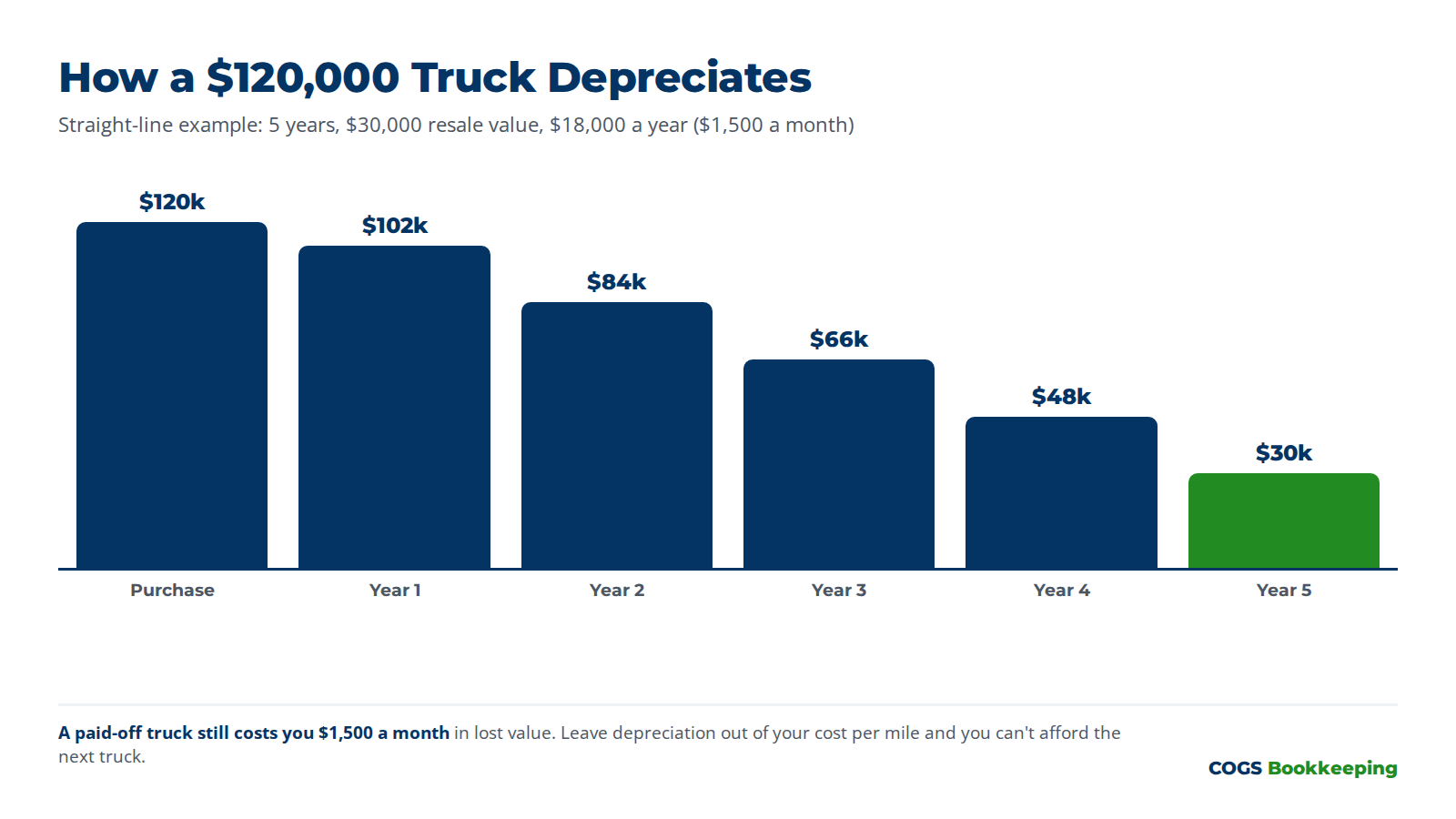
Example: you buy a truck for $120,000 and expect to sell it for about $30,000 in five years. It will lose $90,000 of value while you run it.
$90,000 ÷ 5 years = $18,000 a year
That’s $1,500 a month of real cost
This simple, even method is called straight-line depreciation. Each year the truck’s value on your books goes down by $18,000, from $120,000 to $30,000 by the end of year five.
Why It Matters Even If the Truck Is Paid Off
A lot of owners think a paid-off truck is “free.” It isn’t. It’s still wearing out, and one day you’ll need to replace it. If your cost per mile leaves out depreciation, your rates are too low to buy the next truck.
Depreciation is also different from your truck payment. The payment is how you pay off the loan. Depreciation is how fast the truck loses value. Only the interest part of your payment and the depreciation count as expenses on your P&L. (See Your Truck Is an Asset. Your Truck Payment Is a Liability.)
Book Depreciation vs. Tax Depreciation
There are usually two sets of numbers:
Book depreciation shows how the truck really wears out, so your P&L and cost per mile are honest.
Tax depreciation follows IRS rules. Over-the-road tractors are generally treated as 3-year property, and options like Section 179 and bonus depreciation can let you deduct much or all of the cost in the year you buy.
A big first-year deduction lowers your taxes now, but it leaves less to deduct later. And when you sell the truck, some of that deduction can come back as taxable income (called depreciation recapture). Rules and limits change, so work out the plan with your CPA before you buy.
What to Keep on File
The purchase agreement and bill of sale
The date the truck went into service
Major improvements, like an engine rebuild, that add value or life
The sale paperwork when you trade it in or sell it
COGS Bookkeeping records depreciation every month, so your cost per mile reflects what the truck really costs to own, and your CPA gets clean records at tax time. Get a free evaluation.
Common Questions
What is truck depreciation?
Depreciation spreads the cost of your truck over the years you use it. Each month part of that cost is recorded as an expense, even though no cash leaves the account that month.
Is depreciation on my books the same as the tax deduction?
Not always. Tax rules often allow the truck to be deducted much faster than it actually wears out, and your CPA chooses the tax method. Your monthly books can still use an even, straight-line amount so you can see the real monthly cost of the truck.
Why should depreciation be in my cost per mile?
The truck wears out with every mile. If you leave its cost out, your cost per mile looks better than it is, and you will not have the money for the next truck when this one is done.
What happens if I sell my truck for more than its depreciated value?
The difference is usually taxable, because you already deducted that value through depreciation. Talk to your CPA before you sell or trade in a truck.