
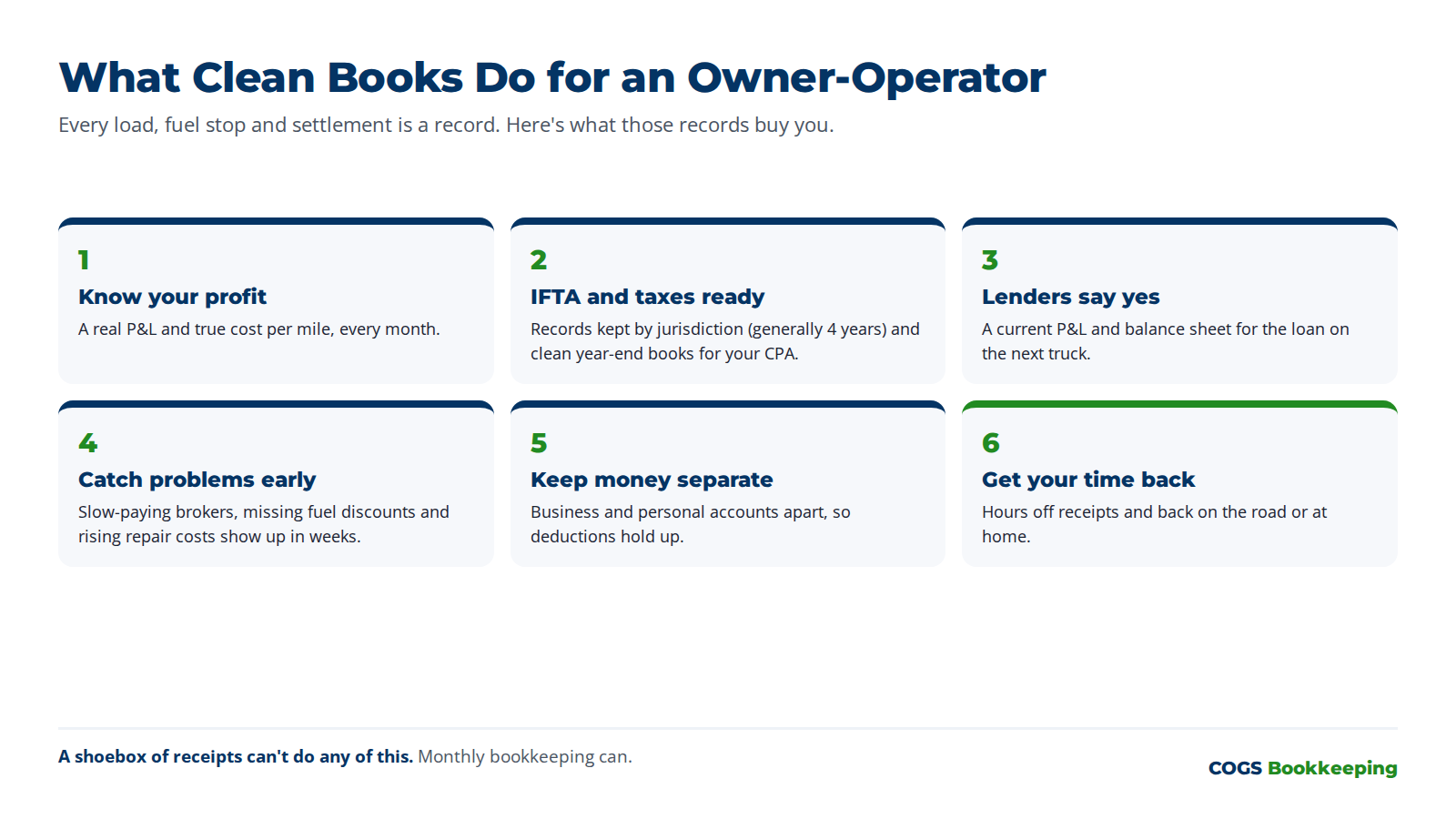
You didn’t buy a truck to do paperwork. But every load, fuel stop and settlement creates a record, and those records decide whether you can get a loan, pass an IFTA audit, pay the right amount of tax, and know if you’re actually making money. A shoebox of receipts can’t do any of that.
1. You Know Whether You’re Making Money
Gross revenue isn’t profit. Without clean books, it’s easy to feel busy and still lose money every mile. Monthly bookkeeping gives you a real P&L and your true cost per mile, so you know which loads, lanes and customers are worth it. (See Your P&L Is Lying to You.)
2. You’re Ready for IFTA and Tax Time
IFTA requires you to keep mileage and fuel records by jurisdiction, generally for four years, and to be able to back up every quarterly return. Clean monthly records make the quarterly filing quick and an audit survivable. At year-end, your CPA gets organized books instead of a cleanup job, and cleanup jobs are billed by the hour.
3. Lenders Say Yes
An SBA loan, equipment financing or a line of credit for the next truck all start with the same request: show us your financials. A current P&L and balance sheet tell a lender you run a real business. Bank statements and a shoebox don’t.
4. You Catch Problems Early
A broker who pays late every time. A fuel card discount that stopped showing up. Insurance that jumped at renewal. A truck whose repair costs keep climbing. Reconciled books show these things in weeks instead of at tax time.
5. Business and Personal Money Stay Separate
Mixing accounts makes it impossible to see what the truck earns and harder to defend your deductions. Good bookkeeping starts with a separate business account and keeps every dollar in the right place.
6. You Get Your Time Back
Every hour spent sorting receipts and matching settlements is an hour you’re not driving or not home. Handing it off is often cheaper than it looks once you count your own time.
What Good Bookkeeping Looks Like
Every transaction categorized for trucking, every month
Bank, fuel card and factoring accounts reconciled
A monthly P&L, balance sheet and cost per mile in plain English
IFTA filed every quarter and records kept for audits
Clean year-end books for your CPA
That’s exactly what COGS Bookkeeping does for owner-operators and small fleets. Get a free evaluation, or start with our free Cost-Per-Mile Calculator.
Common Questions
What records does IFTA require me to keep?
Miles driven in each jurisdiction and fuel bought in each jurisdiction, with the trip and fuel records to back up every quarterly return. Records are generally kept for about four years.
Can I do my own bookkeeping as an owner-operator?
Yes, if you keep a separate business account, record every transaction and reconcile every month. The real question is whether the hours are worth more spent driving or at home.
What is the difference between a bookkeeper and a CPA?
A bookkeeper records and reconciles your transactions every month and produces your financial statements. A CPA prepares your tax returns and gives tax advice. Clean monthly books make the CPA's work faster and cheaper.
How often should my trucking books be updated?
At least monthly, with receipts and settlements captured every week so nothing piles up before IFTA and tax deadlines.